
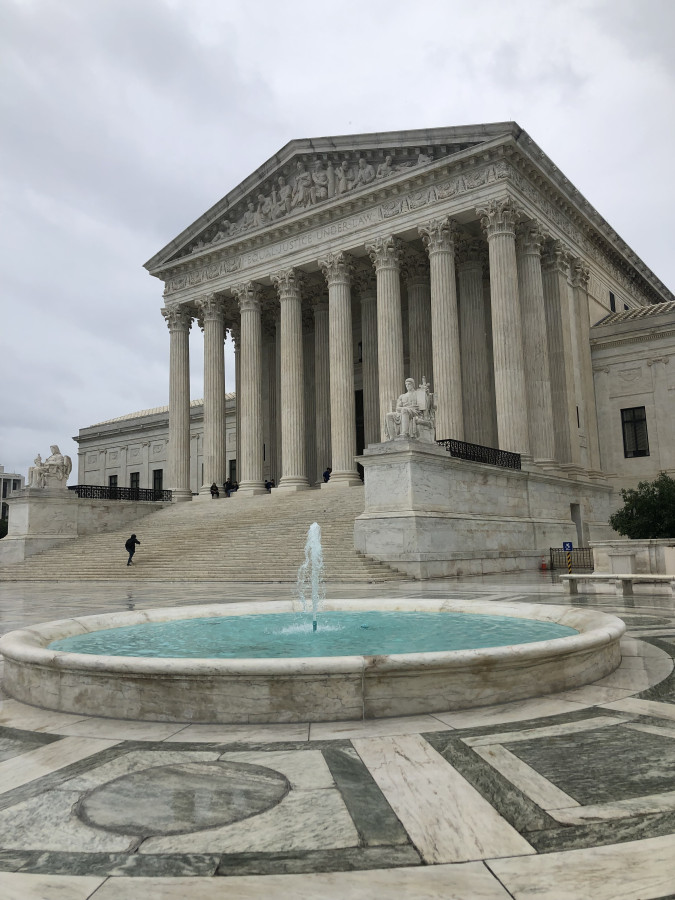
The unitary executive theory has gained another win. The US Supreme Court has recently overturned about 90 years of precedent on the limits of presidential powers. It decided two consequential cases for the internal power dynamics within the executive branch. While the full extent of their effects is uncertain, it is sure to be great.
The so-called unitary executive theory holds that all executive authority is vested in the President, who has sole power and control over the executive branch. The theory is particularly popular with conservative lawyers and politicians, and has been seeing more and more acceptance from the majority of the Supreme Court of the United States (Supreme Court).
Recent Rulings
With the end of its term this summer, the Supreme Court released a number of consequential decisions. Among these are two cases which relate to the power of the President to dismiss officers within the executive branch: Trump v. Slaughter and Trump v. Cook.
In the Cook case, the Supreme Court assessed the constitutionality of the President dismissing Lisa Cook, one of the governors of the Federal Reserve, the US’s central bank. The Court ruled that the judiciary may review whether there was cause for Cook’s dismissal as required by statute and found these restrictions constitutional.
In the Slaughter case, the Supreme Court assessed the constitutionality of the President dismissing a member of another independent agency, the Federal Trade Commission,[1] without cause. While the relevant statute also required cause for dismissal, here, the Court ruled that the Constitution prohibits the legislature from restricting the President’s inherent power to remove their subordinates from office and upheld the dismissal.
These two findings seem incongruous. Indeed, the dissenting judges point this out. Some legal commentators go even further and accuse the Supreme Court of basing its reasoning in Cook more on policy considerations rather than traditional interpretative approaches.
While the opinions delivered in Cook and Slaughter are mostly silent on the issue, the Supreme Court tells us that the difference is in the historical context, going back to the similarly independent first and second banks of the United States, and in its very nature. According to the Supreme Court, the Federal Reserve mostly does not exercise executive power, but rather monetary power, which has never constitutionally been considered a part of executive dominion. The fact that, at present, the Federal Reserve does actually exercise vast regulatory powers remains mostly unaddressed by Cook.
Internal Independence
The rulings probably do not come as a large surprise to those closely familiar with the Supreme Court’s recent jurisprudence. Nevertheless, such an articulation of the Supreme Court’s considerations is bound to have great implications on (not just) the independence of “independent” agencies.
The opinions comfortably hold that the President may remove principal officers, i.e. heads of executive departments, some other high-level officials as well as ambassadors. Commentators note that Slaughter does not clearly address the extent to which it applies to inferior officers. The jurisprudence overturned by Slaughter, the Humphrey's Executor case, addressed the heads of multimember agencies in particular. On the other hand, the Supreme Court in Slaughter shies away from explicitly distinguishing between categories on the whole and speaks chiefly of subordinates.
The opinion also does not address the extent to which it may be applied to members of the Civil Service, who are also protected from dismissal without cause under statute. Similarly, it does not address special types of officers who perform oversight functions, such as Inspectors General.[2] No special considerations are afforded to federal prosecutors either.
Proponents of the unitary executive theory have long argued that the President has ultimate and absolute control over all officials within the executive branch, including those charged with oversight or handling criminal prosecutions. Critics of the theory have, on the other hand, long warned of the devastating implications the theory would have for good governance and prosecutorial independence.
Effect on Certain Courts
In the United States, not all courts and, consequently, not all judges are members of the judicial branch. Rather, US constitutional law distinguishes between courts and judges established under legislative power granted in Article I of the US Constitution, and ordinary courts and judges established under Article III, which governs the judicial branch.
While statutes protect Article I judges from dismissal, the logic behind the opinion in Slaughter could be easily read to change that. As such, the US Tax Court, Claims Courts, Court of Customs and Patent Appeals, Federal Claims Court, Occupational Safety and Health Review Commission, bankruptcy courts as well as others could be at risk of political reshuffles. Many so-called administrative law judges that exist within executive agencies could also be at risk. The decisions could leave Article I judges vulnerable to manipulation from the executive.
The Bottom Line
The independence of inferior officers is guaranteed by other precedent.[3] An attempt at a wide reading of Slaughter changing this would most likely reach the Supreme Court before being accepted by lower courts. The Court, however, has not been shy to overrule even long-standing precedent in recent times. Only time will tell how the Court’s opinion in Slaughter squares with the possible wider implications they hold, especially in the face of the limits implied in Cook.
Notes
[1] The Federal Trade Commission (FTC) is an independent agency charged with the enforcement of anti-trust and consumer protection laws.
[2] Inspectors General are nonpartisan officials tasked with auditing and with finding waste, fraud and abuse within executive agencies.
[3] E.g. United States v. Perkins and Morrison v. Olson.
Sources
Barczewski, B. M., Gaffney, J. M., Garvey, T. (2026). Trump v. Slaughter and the Future of For-Cause Removal Protections. Available at congress.gov: https://www.congress.gov/crs-product/LSB11448
Bednar, N. (2026, June 30). Slaughter’s Silence [blog post]. Available from: https://www.lawfaremedia.org/article/slaughter-s-silence.
Price, Z. (2026, July 16). Legal and Practical Independence after Slaughter and Cook [blog post]. Available at: https://www.yalejreg.com/nc/legal-and-practical-independence-after-slaughter-and-cook/.
Shane, P. M.. (2026, June 29). The Unbearable Lightness of the Unitary Executive Theory [blog post]. Available from: https://verfassungsblog.de/the-unbearable-lightness-of-the-unitary-executive-theory/.
Supreme Court of the United States (2026) Trump v. Slaughter. Available from: https://www.supremecourt.gov/opinions/25pdf/25-332_qn12.pdf.
Supreme Court of the United States (2026) Trump v. Cook. Available from: https://www.supremecourt.gov/opinions/25pdf/25a312_5468.pdf.
White, A. (2026, July 2). After Slaughter and Cook: future Fed fights, and maybe some midnight firings [blog post]. Available from: https://www.scotusblog.com/2026/07/after-slaughter-and-cook-future-fed-fights-and-maybe-some-midnight-firings-/.
Willick, J. (2026, July). What Trump gained from two Supreme Court losses. The Washington Post. Získáno z https://www.washingtonpost.com/opinions/2026/07/19/trump-supreme-court-losses-had-upside-president/.
Photo
Has the Supreme Court fully embraced unitary executive theory? Nejvyšší soud 1 USA, Washington, autor: Michaela Luzio Stenzel.